
Fantasy cricket rewards research depth, not headline volume. This page is our editorial standard: how we frame a contest, what we count as evidence, and where we stop short of making a claim. Read it once before every contest you enter — it will outlast any single match.
How we actually research a contest
Every guide on this site follows the same four-stage process. Stage one is the venue note: surface type, average first-innings score and recent boundary count. Stage two is the role board: which slots are open, which slots are crowded, and which slots have a known role change for the upcoming match. Stage three is the captain frame: floor and ceiling, contest size and ownership context. Stage four is the stress test: a deliberate check for what happens if the toss goes the other way or dew arrives late.
We do not chase a tip sheet or copy a paid prediction. The list of sources we lean on is small and explicit: official match notes from the operator, public ball-by-ball feeds, the broadcaster’s pitch report, and named journalist columns. Anything beyond those four sources is labelled clearly.
A small note on sample size
Three matches is not a trend. Five matches is a hint. Ten matches in similar conditions is the smallest sample we will publish as a guide. Anything below that, we treat as a flag rather than a recommendation.

The venue notebook, distilled
A venue notebook is the single most underused tool in fantasy cricket. Most players skip it because it feels obvious; the ones who keep it are the ones who understand that “good batting pitch” is shorthand for four or five specific conditions, not a vibe.
A clean venue notebook has four columns: average first-innings score, average second-innings score, dew factor, and a notes column for the recent trend (boundary count, dot-ball percentage, batting-order stability). Two-pace? Write it down. Square turn in the second innings? Write it down. Boundary sizes? Write them down. The notebook gets short fast, and that is the point.
Sample venue notebook — five recent IPL venues
Last 10 matches per venue · rolling 18 months| Venue | Avg 1st | Avg 2nd | Dew factor | Recent note |
|---|---|---|---|---|
| Wankhede | 178 | 164 | High | Chase advantage confirmed across 7 of last 10 |
| Chinnaswamy | 194 | 181 | Medium | High boundary count; batting paradise |
| Eden Gardens | 172 | 165 | Medium | Spinners tighten middle overs |
| Narendra Modi | 167 | 159 | Low | New ball dominates; batting gets harder at 50+ overs |
| Arun Jaitley | 175 | 168 | Low–medium | Even contest; toss less decisive |
Role frames, not player picks
The biggest mistake first-time players make is picking names instead of roles. The same player can be a different fantasy asset depending on the role they are asked to play — an anchor at 3 is not the same fantasy asset as an opener at 1, even when it is the same person.
Opener (1–2)
High ceiling, low floor. Boundaries matter; dot balls hurt.
Anchor (3–4)
Stable contributor. Strike rate 120–140 is the sweet spot.
Finisher (5–7)
High ceiling, low floor. Death-overs bowling and fielding matter.
Powerplay bowler (1–6 overs)
Wickets + dot balls. Captain multiplier candidate when conditions help.
Middle-overs spinner (7–15 overs)
Economy-based, with wickets as bonus.
Death bowler (16–20 overs)
Wickets + dot balls. Wicket bonus outweighs economy penalty.
The stress test you should run before locking
A stress test is a 90-second deliberate check: “if the toss flips, what do I do?” Most lineups that fail were not stress-tested. The two most common failure modes are: the captain multiplies shift to a role that no longer fits the conditions, or the bowler mix stops matching the surface. Both are visible in 90 seconds if you look.
Toss flip
If your captain flips to bowl first, the dew math changes. Re-rank anchors; drop the third seamer if surface slows.
- Death-overs spinner moves up
- Powerplay bowler stays
- Anchor at 3 if batting first, 4 if chasing
Late XI change
If the operator confirms a player is out after the toss, use the substitution window. Don’t panic; just confirm role fit.
- Sub only if role is materially different
- Don’t sub captain for captain unless injury confirmed
- Cap ownership of replacement
The captain frame in one paragraph
In small leagues (8–30 entries), defend floor: pick the captain with the most stable contribution. In large fields (1,000+ entries), chase ceiling: pick the captain with the highest plausible upside and target differential ownership. Contest size and ownership context together decide your frame, not the captain’s reputation.
Editorial discipline: We do not publish tips. We publish frames. If a frame tells you to captain the highest-ceiling role in a 10,000-entry contest, you do that. If it tells you to defend floor in an 8-entry contest with friends, you do that. The desk’s job is to publish the frame and the evidence; your job is to make the call.
What we deliberately do not do
We do not invent lineups. We do not claim a player will score runs because a paid source told us. We do not run giveaways or paid leaderboards. We do not represent any operator. If we missed something, we correct it on the page and publish the date in our open correction log.
Do you publish your own lineups?
No. We publish frames, evidence and worked examples. A lineup is your decision — we will not take that responsibility away from you by publishing “the desk’s team”.
Where do you get your venue data?
Publicly available ball-by-ball feeds and the broadcaster’s pre-match pitch note. We always name the source. If we cannot name the source, we do not publish the figure.
How often do you update guides?
Any time an underlying fact changes — venue change, confirmed XI, weather update. The date is shown next to every guide.
Keep reading — the desk’s most useful follow-ups
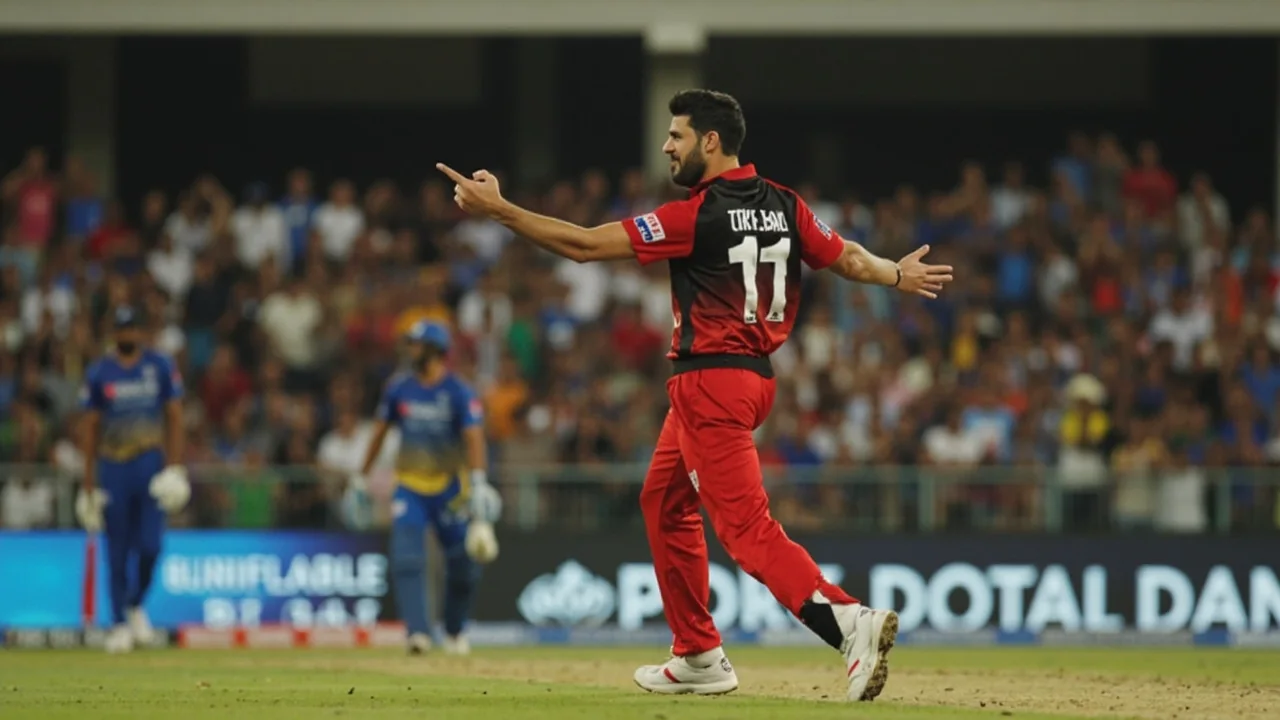 IPL News
'I've got no idea': Aiden Markram on prospect of leading LSG next IPL season
Markram told Cricinfo he has not thought about the LSG captaincy, leaving the call to the franchise. What it means for fantasy users.
Read the news brief → Predictions
How we frame a single match prediction
Fixture-led projections with timestamps and verification status.
Read the guide → Captaincy
Captain frame for small vs. large fields
When to chase ceiling, when to defend floor.
Read the guide → Players
Reading the role board for an unfamiliar squad
Translate a squad you have not watched into role-by-role opportunity.
Read the guide →The long-run edge
A fantasy-cricket edge is built over weeks, not contests. The research habits — venue notebook, role frame, captain frame, stress test — compound across contests. A single lineup has high variance; a frame has low variance. The desk’s recommendation is to invest in the frame and accept the variance on the lineup.
A clean list of research sources
The desk leans on a small, explicit set of sources. Below is the list, ordered by reliability for fantasy-cricket research.
Public ball-by-ball feeds
Match-level data; venue notebook; role board numbers.
Operator official pages
Terms, KYC, withdrawal timing, bonus terms — always the operator’s own page.
Broadcaster match notes
Pitch notes, weather, confirmed XI.
State government publications
Jurisdiction and eligibility.
Independent public registries
Company identity and regulatory filings.

Frame vs. tip — the desk’s standard
The desk publishes frames, not tips. A frame is a decision-rule: a captain frame tells you how to choose a captain, not who to captain; a venue frame tells you how to read a venue notebook, not what the venue average is. A tip is a specific pick: captain X, venue average Y. Frames compound; tips do not. The desk’s standard is frame, not tip; the discipline compounds across contests.
A short recap
The desk publishes research-led frames, not tips. A frame compounds across contests; a tip does not. The frames covered on this site: venue notebook, role frame, captain frame, stress test, scoring workbook. Each frame has its own page; each page has a date stamp and a verification status. Use the frames; build your own discipline around them.
Questions readers ask
What is the single biggest research mistake?
Treating a paid tip sheet as evidence. A paid tip sheet is a marketing artefact. It may be correct; it may not be. It does not have a public source trail. We do not include those in our research.
How long does a good venue notebook take to build?
For a single venue, around 20 minutes if you start from the ball-by-ball feed. For a five-venue notebook, expect an afternoon. It pays back across every contest at that venue for the rest of the season.
Can I cite the desk’s research in my own predictions post?
Yes, with attribution to 11Wickets Editorial Desk and a link back. We do not require permission for short fair-use citation; please do not reproduce an entire page.
Open the editorial app entry
Verify the current offer in your own account, then play only what you can afford to lose.