
A lineup is not a one-shot decision. It is a draft at the venue notebook stage, a working version after squad availability is confirmed, and a final lock after the toss. This page is the standing brief for the draft and the lock — not for the working version in the middle, which is where most mistakes happen.
Two stages, not one decision
We treat a lineup as two decisions: the draft (before the toss) and the lock (after the toss). The middle is a working version. If you only check once, you will miss the post-toss window. If you check too often, you will over-correct.
The draft checklist (pre-toss)
Venue notebook
First-innings average, dew factor, recent boundary size.
Squad availability
Probable XI from operator + broadcaster; flag any injury watch.
Role board
Openers, anchors, finishers, powerplay bowlers, spinners, death bowlers.
Captain frame
Floor vs. ceiling based on contest size and ownership.
Stress test
Toss flip + late XI change. Decide what to keep and what to re-rank.
The lock checklist (post-toss)
Confirm XI
Operator in-app feed is the source; ignore social posts.
Confirm batting order
Re-rank anchors; protect openers unless role changed.
Re-rank bowlers
Drop third seamer if surface slows; move death spinner up.
Re-assign captain
Captain multiplier goes to the role that benefits most from the toss.
Use substitution window
Only sub on a confirmed injury or a meaningful role change.
Common mistakes to avoid
Over-correcting after the toss
A working version is not a draft. Resist the urge to rebuild from scratch after the toss; re-rank the roles you flagged in the stress test, not the lineup itself.
Chasing ownership shifts
If a captain pick drops from 30% to 8% in an hour, that is a signal worth noticing — not necessarily a reason to switch. Always check the underlying reason before moving the multiplier.
Subbing on a hunch
Use the substitution window only on a confirmed injury or a meaningful role change. Hunches are research, not facts.
A sample day on the desk
Below is how the desk runs the day for a single fixture. Times are illustrative; the structure is not.
Sample-day timeline
Illustrative · adapt to operator timings| Time | Action | Source | Output |
|---|---|---|---|
| Morning | Venue notebook re-check | Public ball-by-ball feeds | Updated notebook entry |
| 6 hr pre-toss | Squad availability | Operator + broadcaster | Probable XI with role flags |
| 3 hr pre-toss | Draft lineup | Draft frame | Working version |
| 1 hr pre-toss | Pitch & weather | Curator + forecast | Toss stress-test status |
| Toss | Re-rank + captain reassign | Operator in-app feed | Lock version |
| 30 min pre-deadline | Final sub window | Operator in-app feed | Final lock |
Fresh from the desk
 IPL & Offers
How to Compare IPL Offers, Trial Credits and Venue Deals Before You Sign Up
Two IPL offers can show the same headline percentage and mean two very different things. A decision framework for eligibility, expiry, redemption path, wagering, exclusions and cancellation — with examples clearly labelled as hypothetical and no live offer described.
Read the explainer →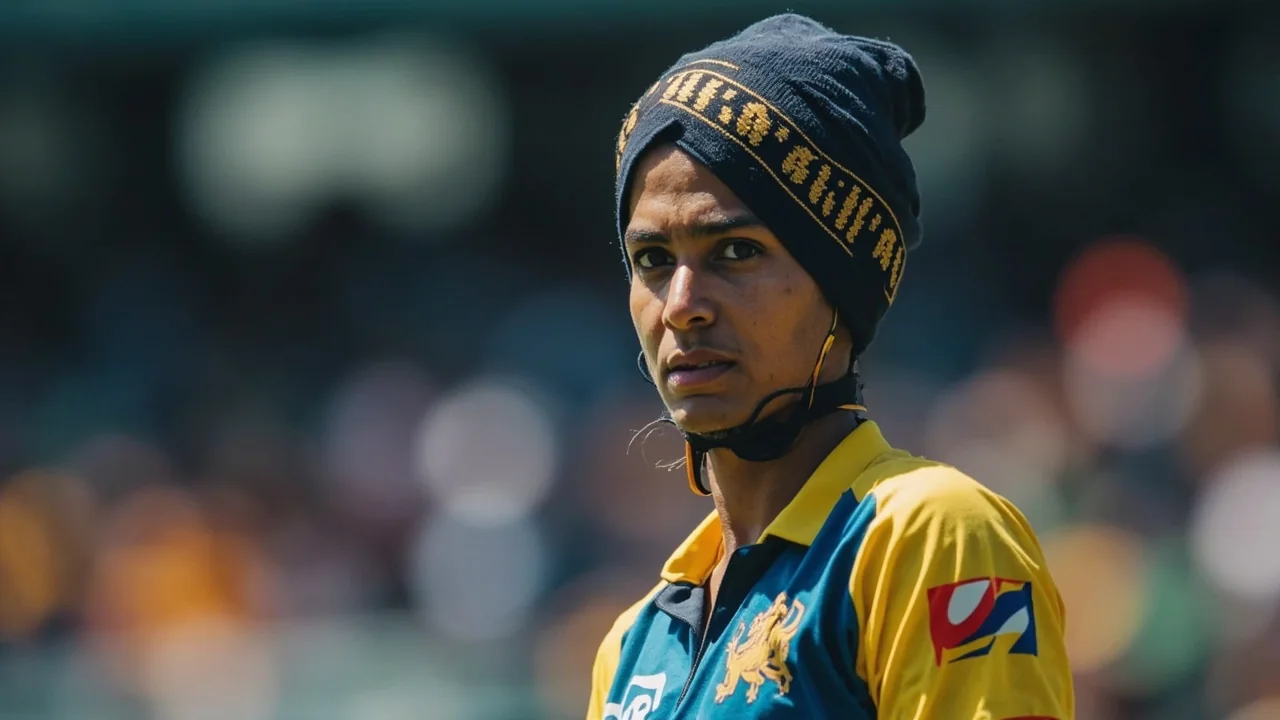 Women’s Cricket
Sri Lanka Women’s youth pipeline delivers: 17-year-old debutant and a 12-year first as Pakistan fall to a 2-0 T20I sweep
Sri Lanka Women take the T20I series 2-0 and the ODI series 2-1 over Pakistan — their first bilateral series win over Pakistan in twelve years — led by Imesha Dulani’s hundred and a Player-of-the-Match debut from 17-year-old Sanjana Kavindi.
Read the news brief →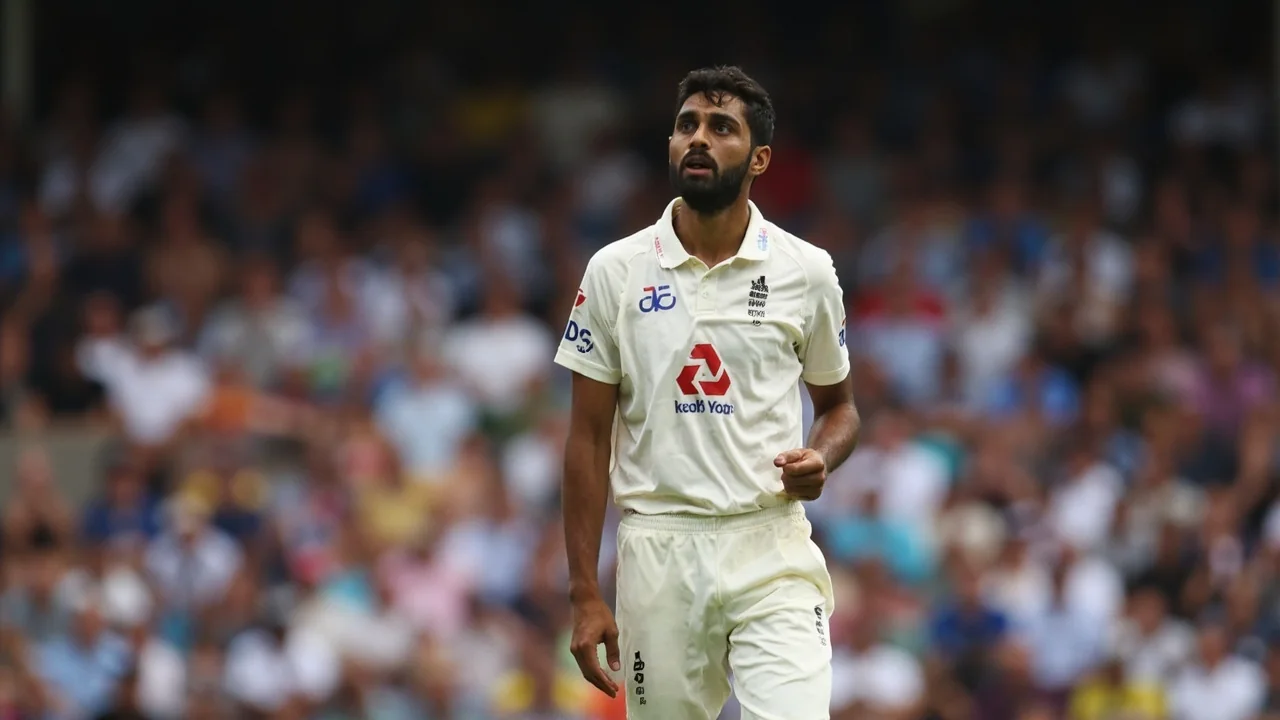 County News
Suthar re-signed by Warwickshire for final four County Championship matches after 11-wicket return stint
India left-arm spinner Manav Suthar returns to Edgbaston for Hampshire (2 Sep), Glamorgan, Essex and Leicestershire after an 11-wicket, two-match stint including a five-for. Fantasy users: re-rank him as a middle-overs ceiling, hold if you own him, watch the Hampshire pitch.
Read the news brief →Keep reading — the desk’s most useful follow-ups
 Captaincy
Captain frame after the toss
How to reassign the multiplier when the conditions flip.
Read the guide → Predictions
A prediction frame for a single fixture
How the desk structures a match prediction.
Read the guide → Research
Reading the role board for a single fixture
Translate squad availability into a slot-by-slot frame.
Read the guide →Time-of-day checklist
The time of day at which you re-check the lineup matters as much as the checklist itself. Below is the desk’s recommended timing for a typical afternoon-evening fixture.
Morning (8–10 am)
Re-check the venue notebook. Look for overnight weather updates and any pitch note changes.
Midday (12–2 pm)
Re-check squad availability. Confirm probable XI; flag any injury watch.
Pre-toss (1–3 hours before)
Lock the draft. Run the stress test. Decide which slots to re-rank after the toss.
Toss
Re-rank anchors and bowlers. Re-assign captain multiplier if the role moves up or down by 30%+.
Post-toss, pre-deadline
Use the substitution window only on confirmed injury or meaningful role change. Resist over-correction.
When to play a second lineup
A second lineup is useful in mid-sized contests (100–1,000 entries) and essential in large fields (1,000+). The desk recommends a second lineup whenever your contest budget allows it; the variance reduction is real, especially in large fields where a single lineup is high-risk. The captain frame across the two lineups should be different — one defends floor, the other chases ceiling.
A good day vs. a bad day
A good day on the desk is one where the captain frame is sharp, the venue notebook is current, the role board is stable and the post-toss re-rank produces a clear pick. A bad day is one where the role board is in flux, the venue notebook is stale, the captain frame is muddled and the post-toss re-rank produces ambiguity. On bad days, the desk recommends defensive lineups (small contests, floor-defending captaincy) rather than aggressive lineups.
The three decisions, recap
A lineup is three decisions: the draft, the stress test, the lock. The draft sets the role mix and captain frame. The stress test runs the toss-flip and late-XI scenarios. The lock re-ranks anchors and bowlers after the toss and uses the substitution window only on a confirmed injury or role change. The three decisions, in that order, are the desk’s standing workflow.
When to build a fresh lineup
A fresh lineup is sometimes the right move — not because the working version is wrong, but because the underlying inputs have changed enough that a rebuild is faster than a re-rank. The desk recommends a fresh lineup when: (1) the role board has shifted for 2+ players; (2) the captain frame has changed (e.g. contest size moved from small to large); (3) a new player has emerged in the squad who was not in the draft. In all other cases, a re-rank is faster and safer.
A good week, in summary
A good week on the desk looks like this: build venue notebooks for the upcoming matches; track squad availability across the week; draft lineups on the morning of the match; re-rank after the toss; lock before the deadline; review after the contest; update the venue notebook with the new data; repeat. The seven-day cycle compounds; the frame gets sharper each week.
Questions readers ask
How often should I re-check the lineup?
Twice: once after the squad is confirmed (about 1–2 hours pre-toss) and once at the toss. Anything more frequent risks over-correcting.
Should I lock before the toss?
Only if the platform requires it. Most platforms allow you to use the substitution window after the toss. Locking early means you cannot revise.
What if I miss the post-toss window?
Treat it as a lesson, not a failure. Note what changed (anchors, captain, bowler mix) and apply that frame to the next fixture at the same venue.
How the Today’s Team decision trees are built
The Today’s Team decision tree starts with the toss. The toss is the single most important input to the team-selection frame: it determines which side of the pitch the team bats on first, which changes the dew curve, the short-boundary calculation, and the death-overs risk. The desk records the toss time, the playing XI announcement, the pitch report and the boundary dimensions before the decision tree runs; the tree is rebuilt from those inputs, not from a templated default.
The tree has three checkpoints: the captain and vice-captain pick, the bowling-all-rounder split, and the differential-bowler pick. The captain pick is justified by the desk’s captain frame: a captain is a pick where the floor/ceiling swing is wide enough to justify the 2x multiplier. The bowling-all-rounder split is justified by the death-overs math: how many overs of pace vs spin the opposition is likely to face in the back half. The differential-bowler pick is justified by the recent-form data; if there is no clean differential pick, the desk flags “no differential” rather than inventing one.
Reader follow-up
The Today’s Team decision tree is also the desk’s most-edited post type. The post is built on the day of the match, after the toss, and locked at the contest deadline. The desk does not edit a Today’s Team post after the deadline — the post is a record of the desk’s decision at the time the decision was made. A post-match follow-up is published separately on the Match Predictions hub. The follow-up records what happened, not what the desk predicted; the prediction is the pre-deadline record.
When is the Today’s Team post built?
After the toss, on the day of the match. The post is locked at the contest deadline.
What if the toss is delayed?
The desk holds the post until the toss is confirmed. The desk does not publish a pre-toss Today’s Team post.
Does the desk edit the post after the deadline?
No. The post is a record of the desk’s decision at the time the decision was made. A post-match follow-up is published separately.
Can I send a contest entry I built from the desk’s tree?
The desk publishes the tree; the contest entry is the reader’s own. The desk does not run contests, does not enter contests and does not act as the operator.
Open the editorial app entry
Verify the current offer in your own account, then play only what you can afford to lose.