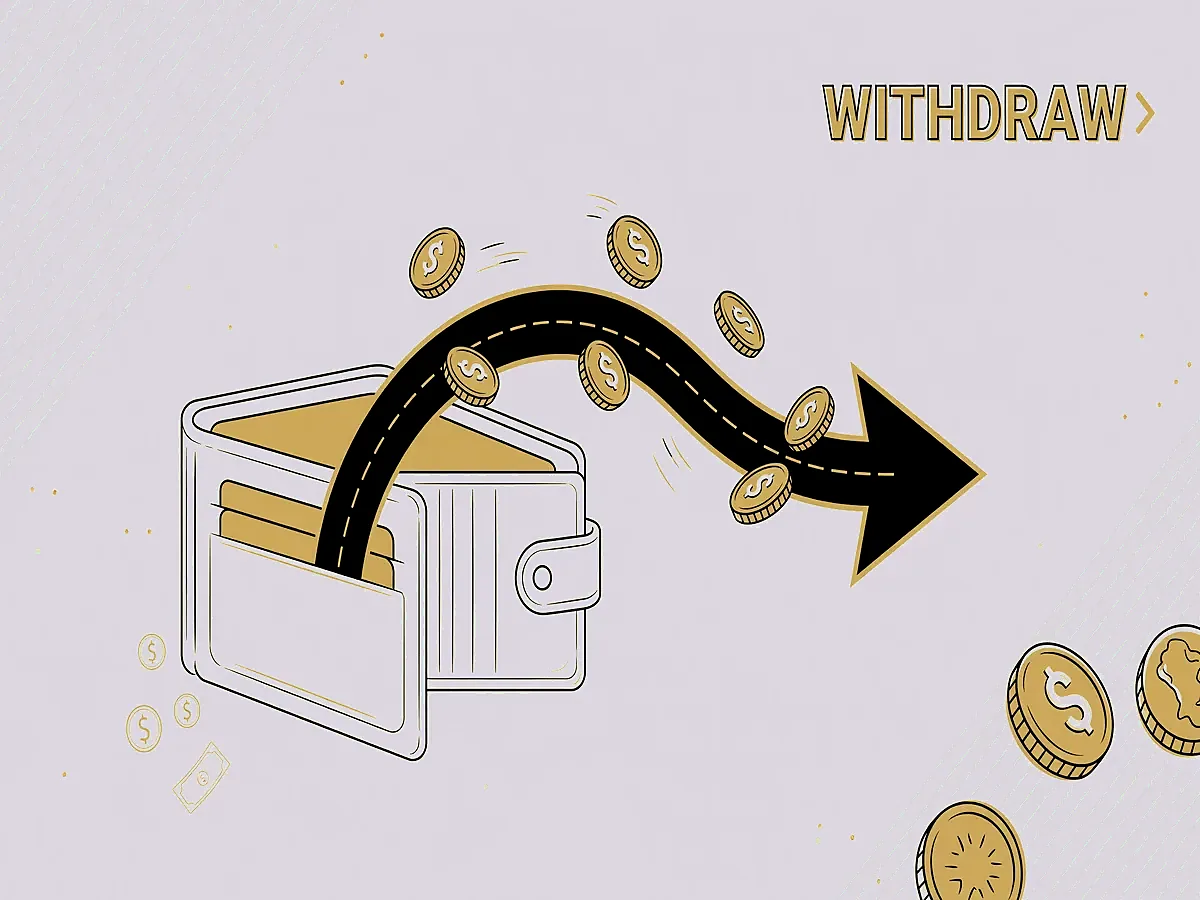
A clean withdrawal is the difference between a research-led hobby and a frustrating one. This page is the desk’s standing brief on the documents, timing and common failure points you should know about before you make your first deposit.
Documents we ask you to keep ready
Get these right at signup so withdrawal is not blocked later. Most withdrawal rejections we hear about come from one of these four documents.
PAN card
Name on PAN must match the bank account exactly.
Aadhaar (front + back)
Clear, uncropped image. Some operators accept other OVDs.
Bank account or UPI ID
Account holder name must match PAN.
Cancelled cheque or bank statement
Less than 3 months old; visible IFSC, account number and name.

The four stages of a withdrawal
Standard withdrawal stages
Common pattern · verify in operator terms| Stage | What happens | Typical timing | Common failure |
|---|---|---|---|
| Request | You initiate the withdrawal in-app | Immediate | Bonus wagering incomplete |
| KYC check | Operator verifies PAN + bank match | 1–24 hours | Name mismatch across documents |
| Operator approval | Internal review and approval | 1–48 hours | Unverified mobile or email |
| Funds settle | Funds arrive in your bank / UPI | 1–3 business days | Bank closed, IFSC incorrect |
Common failure points and how to avoid them
Name mismatch
PAN, Aadhaar and bank account must show the same name. If your bank account has a middle name that PAN does not, fix one of them before withdrawal.
Bonus wagering incomplete
Most operators require bonus funds to be wagered before withdrawal that includes the bonus. Read the bonus terms.
Bank closed or IFSC incorrect
Use a current, active bank account. IFSC must match the branch. Verify with a small test withdrawal before requesting a large one.
When to escalate to customer care
If a withdrawal is stuck beyond the timing shown above with no explanation in-app, escalate through the operator’s verified customer-care route (see Customer Care). Have your account ID, withdrawal reference number and the date of the request ready.
No invented timelines: Withdrawal timing varies by operator, payment method and KYC status. The figures above are typical; verify in the operator’s terms and in your own account-level experience.
The test-withdrawal habit
Always make a small test withdrawal before requesting a large one. A test withdrawal (typically ≤ ₹500) takes the same operator path as a large one but exposes bank-name mismatches, IFSC errors and account-locks at a small cost. Most players skip this and discover the problem on the first real withdrawal.
Tax and fees — what to expect
Indian fantasy-cricket winnings above ₹10,000 in a single contest are subject to TDS at 30% (plus surcharge and cess, as applicable). Winnings from multiple contests are not aggregated for TDS purposes; each contest is independent. Operator fees, payment-rail fees and any currency-conversion fees are usually deducted from the withdrawal amount. Read the operator’s fee schedule before requesting.
The penny-drop verification
A penny-drop is a tiny test deposit (≤ ₹1) that the operator sends to your bank account to verify it is active and in your name. It is one of the cleanest verification mechanisms in Indian payments. If the operator offers a penny-drop at signup, use it. If they do not, a small test withdrawal is the second-best option.
Withdrawal fees — what to look for
Most operators do not charge a withdrawal fee, but the underlying payment rail may. UPI withdrawals are usually free; bank transfers may carry a small operator fee. Read the operator’s fee schedule; the desk flags a fee above 2% of the withdrawal amount as a yellow flag and above 5% as a red flag.
Common “withdrawal stuck” reasons
Operator queue backlog
During peak contest periods, withdrawal queues can take 48–72 hours. Check the operator’s status page before escalating.
Bank-side delay
Some banks have a longer settlement window for incoming transfers; check with your bank before contacting the operator.
Bonus wagering incomplete
If the withdrawal includes bonus funds and the wagering is not complete, the operator will hold the bonus portion. Read the bonus terms.
KYC re-verification
Some operators re-verify KYC at withdrawal, especially for first withdrawal or for amounts above a threshold.
If your withdrawal is rejected
A rejected withdrawal usually comes with a reason. Three reasons cover most rejections: bonus wagering not complete, KYC re-verification required, or bank account mismatch. Read the reason carefully; the fix is usually specific. If the reason is unclear, contact the verified customer-care route with the withdrawal reference number.
Withdrawal speed vs. amount
Smaller withdrawals usually process faster than larger ones. Operators often have a tiered review process: small withdrawals auto-approve; medium withdrawals get a queue review; large withdrawals get a manual review with KYC re-check. The tiering is usually disclosed in the operator’s terms; the desk flags a manual-review threshold above ₹50,000 as a yellow flag and above ₹100,000 as a red flag for a research-led hobby.
A good bank for fantasy cricket
The bank you use for fantasy cricket matters more than you think. A bank with a fast incoming-transfer settlement (most large public-sector and private-sector banks) gives you a faster withdrawal experience than a smaller bank or a payments bank. A bank with strong UPI support gives you a faster deposit experience. The desk does not endorse specific banks, but the practical advice is to use a large, well-known bank for fantasy cricket and to keep the bank account separate from your primary savings if possible.
Small vs. large withdrawals
A small withdrawal (≤ ₹2,000) usually processes inside 24–48 hours with auto-approval. A medium withdrawal (₹2,000–₹50,000) usually requires queue review and processes inside 48–72 hours. A large withdrawal (> ₹50,000) usually requires manual review with KYC re-check; the timeline is 3–7 business days. Verify in the operator’s terms; the desk flags a manual-review threshold above ₹50,000 as a yellow flag and above ₹100,000 as a red flag for a research-led hobby.
A withdrawal recap
A clean withdrawal flow has four habits: documents ready at signup, withdrawal lock enabled, small test withdrawal before large withdrawals, and the verified customer-care route saved. The four habits together cover most of the common withdrawal scenarios.
Questions readers ask
How long does a withdrawal take?
Standard timeline is 1–3 business days after approval, with the full KYC + approval + settle cycle usually completing inside 5 business days. Verify in the operator’s terms.
What is the minimum withdrawal amount?
Most operators set a minimum of ≤ ₹200. Verify in the operator’s terms.
Can I cancel a withdrawal request?
Usually yes, if the request has not yet been processed. The cancel option is in the withdrawal history on most platforms.
A withdrawal timeline built from public records
The desk has built a withdrawal-timeline record from public reports on the Customer Care page, from reader-submitted timelines (anonymised, with consent) and from the operator’s own stated processing windows. The typical UPI withdrawal completes inside 24 hours from the moment the operator marks the request as “approved”; a Netbanking request typically completes inside 48–72 hours; a bank-account transfer via IMPS typically completes inside 30–60 minutes once the operator releases it. The timelines are typical, not promised — the operator’s own “Pending withdrawals” screen inside the app is the live record.
The desk does not aggregate the timelines into a public leaderboard, because the sample is small and the source mix changes every week. What the desk does publish is a methodology note: how a typical timeline is reconstructed from a single reader’s app screenshot, what counts as “approved”, what counts as “credited”, and how the two events are separated. The methodology is on the Editorial Standards page; the raw timelines live in the open correction log when a reader consents.

Reader follow-up
A withdrawal request is a record the desk mirrors on the open correction log when a reader consents. The log carries the operator’s response time, the KYC doc queue, the route used and the final credited amount. The desk does not aggregate the records into a public scoreboard, because the sample mix is small and the operator’s own records are the live source. What the desk does publish is the methodology: how a typical record is reconstructed from a single reader’s app screenshot, what counts as “approved”, what counts as “credited” and how the two are separated.
How long does a UPI withdrawal take?
Typically under 24 hours from the moment the operator marks the request as approved. The operator’s “Pending withdrawals” screen is the live record.
What is TDS treatment on contest winnings?
30% plus surcharge and cess on single-contest winnings above ’10,000. The operator deducts at source; the reader sees the post-TDS credit in the withdrawal queue.
Can a withdrawal be reversed?
Yes — if a contest is later reversed for any reason, the operator debits the withdrawal back. The desk’s Customer Care page carries the documented escalation.
Why was my withdrawal held?
Most common reasons: KYC not complete, bank-name mismatch, account flagged for review. The desk’s Wallet & KYC guide walks through the typical holds.
Open the editorial app entry
Verify the current offer in your own account, then play only what you can afford to lose.