
Fantasy cricket is a game of research and contest selection, not a game of cricket knowledge alone. This page is the desk’s standing brief for a player’s first match: eligibility, signup, contest selection, lineup construction, lock, post-match review and the responsible-play reminder that should sit at the end of every session.
Before you start — eligibility and 18+
Fantasy-cricket contests with real-money entry are 18+ in India and require you to be physically present in a permitted state. The list of permitted states changes — confirm with the operator before you deposit. If your state is restricted or you are under 18, do not play real-money contests. Free-to-play contests are usually still available; treat them as a research surface, not a way around eligibility rules.
A single rule worth printing
If you are not 18+, or you are in a restricted state, or you cannot afford to lose the entry fee, do not deposit. There is no second-best option that solves this.
Signup and account verification
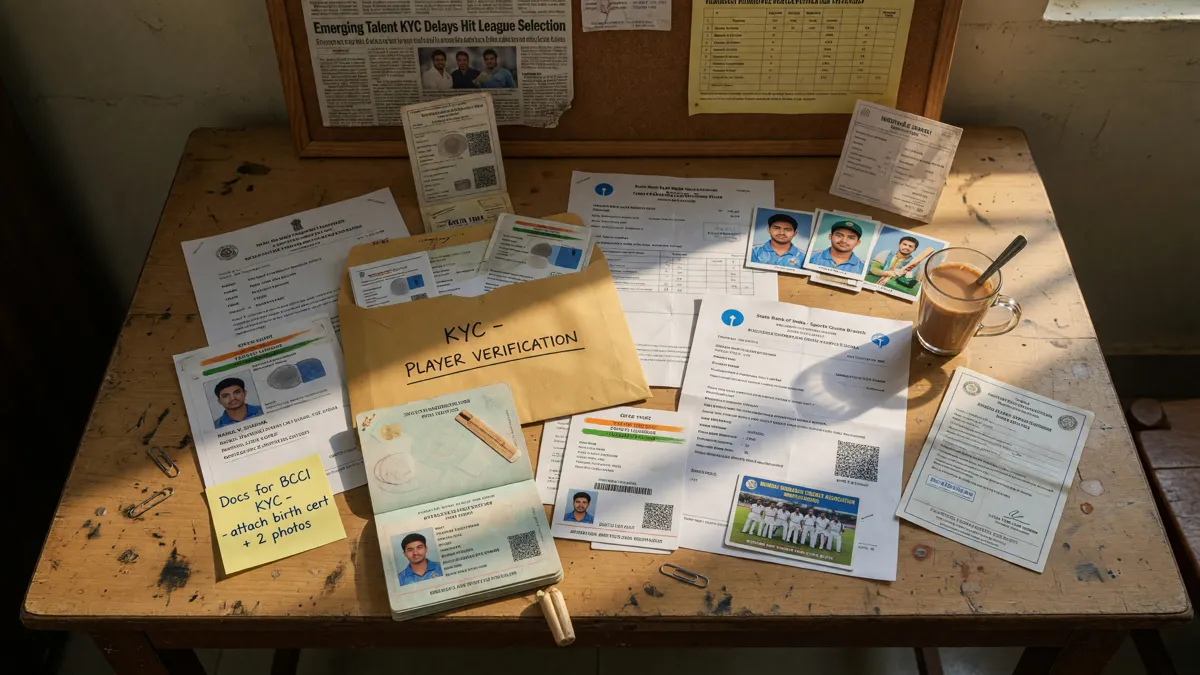
Signup requires a mobile number, an email address and a password. Most operators also require PAN, Aadhaar (or another OVD) and a bank account or UPI ID before withdrawal. Get these right at signup so withdrawal is not blocked later.
Mobile + email
Verify both. Unverified accounts are usually blocked from withdrawal.
PAN
Name on PAN must match the bank account.
Aadhaar / OVD
Front and back of the document; clear, uncropped image.
Bank or UPI
Account holder name must match PAN.
Self-exclusion setting
Set a deposit limit on day one. You can raise it later; lowering it usually has a cooldown.

Contest selection — what to enter and what to skip
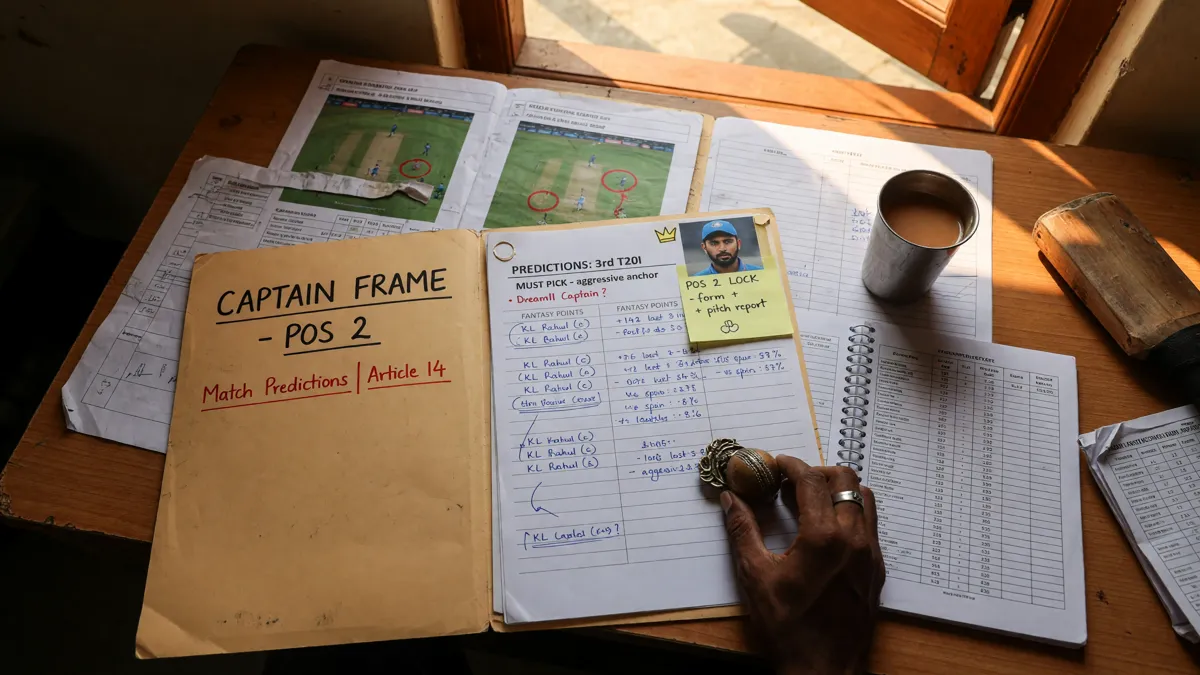
Contests vary in entry fee, prize structure and field size. For your first match, pick a small-league contest with a known field — usually friends or a small public league — before you scale up to large-field contests. The captain frame you read in Captaincy Lab depends on the contest size; small leagues defend floor; large fields chase ceiling.
Building your lineup

The lineup builder enforces a salary cap, a role mix (typically 1–4 wicketkeeper, 3–6 batter, 1–4 all-rounder, 3–6 bowler) and a team cap (usually ≤7 from one IPL team). Build your role frame first, then fill it with the players who match the role.

Standard lineup shape
Common shape · check your contest terms| Role | Min | Max | Captain |
|---|---|---|---|
| Wicketkeeper | 1 | 4 | Optional |
| Batter | 3 | 6 | Often anchor captain |
| All-rounder | 1 | 4 | Differential ceiling |
| Bowler | 3 | 6 | Wicket-favouring conditions |
Post-match review

The review is where research compounds. Re-read the venue notebook and your role frame; check which player delivered above or below your prediction; note the gap. Three or four reviews across one venue will give you a sense of the venue’s pattern that no single contest can.

A responsible-play reminder

Play only what you can afford to lose: Set a weekly deposit limit. Take a review at the end of every week. If the review stops being fun, take a week off. State helplines and self-exclusion tools are listed in Responsible Play.
Your first month — what to expect
Your first month is research spend, not earnings. Expect to lose money; expect to learn the venue notebook, the role frame, the captain frame and the post-toss re-rank. By the end of the first month, your edge will be in the role frame and the captain frame, not in any specific lineup. The lineup compounds from the frame.
Common first-month mistakes
Depositing more than your research budget
First-month deposit should be the smallest entry fee you can find. Treat it as research spend, not as the start of an earnings journey.
Skipping the venue notebook
A lineup built without a venue notebook is a guess, not research. The desk’s venue notebook is the most consequential research habit for new players.
Over-weighting the most recent match
Last match is one data point. Trend across 5–10 matches is more useful than the most recent match.
Chasing a bonus with high wagering
A 200% bonus with 30× wagering is rarely worth the conditions. Read the wagering requirement before accepting.
Ignoring the post-toss window
Most players set the lineup before the toss and never re-visit. The post-toss re-rank is where most of the value is captured.
Your second month
Your second month is when the frame starts to compound. By now you have a venue notebook, a role frame, a captain frame, and a stress-test habit. Your second-month research should focus on three things: (1) refining the captain frame for your contest size; (2) building a player opportunity index for the players you captain most often; (3) re-checking the responsible-play tools you set up in month one. The third item is the most important — a deposit limit that was right in month one may not be right in month six.
A three-month check-in
At the three-month mark, you should have a venue notebook, a role frame, a captain frame, and a stress-test habit. You should also have a responsible-play review on file and a deposit limit that is comfortable. If any of those is missing, that is the area to work on in month four. The desk’s recommendation: do not add new habits until the existing ones are automatic. Adding habits on top of unbuilt habits is the most common reason new players burn out.
A clean first month, in summary
A clean first month ends with: a venue notebook built for at least 5 venues, a role frame written down, a captain frame written down, a stress-test habit that runs on every contest, a responsible-play review on file, and a deposit limit that is comfortable. If you have all six at the end of month one, you are ahead of 90% of first-time players. The compounding starts in month two.

Questions readers ask
Is fantasy cricket legal in India?
Real-money fantasy cricket is permitted in most Indian states for adults 18+. A small set of states currently restrict paid fantasy contests. The list changes — verify with the operator before depositing.
How much should I deposit on day one?
The smallest entry fee you can find. Treat day-one deposit as research spend, not as the start of a money-making journey.
Can I withdraw my deposit?
Yes — most operators allow withdrawal back to the original payment method after KYC is complete. Some platforms require a minimum contest entry before withdrawal.
How to play — the five-step floor, not just the ideal flow
The How to Play guide describes the ideal flow: sign up, verify, deposit, enter a contest, build a team. The ideal flow assumes nothing goes wrong. The desk’s “five-step floor” is what the desk recommends when the ideal flow breaks: a state is restricted, a deposit is on hold, a KYC doc is mismatched, a withdrawal is pending, or a contest entry has been reversed. The floor is the same five steps, but the actions at each step are different.
The floor is documented because the desk hears from readers who hit one of the five failure modes above. The floor guides a reader to the right next step: which Customer Care route is the right escalation, which Wallet & KYC doc to re-upload, which Legal Status check to run first, which Withdrawal Guide section matches the pending status, or which Delete Account request to file if the reader no longer wants to play.

Reader follow-up
The how-to-play guide is also the desk’s reference for contest categories. Most operators run four categories: free contests (no entry fee, no cash prize), practice contests (small entry fee, no cash prize), head-to-head contests (entry fee, cash prize, two-player pool) and large-pool contests (entry fee, cash prize, multi-player pool). The desk’s recommendation is to start with free contests or practice contests — the goal of the first session is to learn the operator’s flow, not to win money. The desk does not recommend a contest entry until a reader has built a team they can defend in their own account.
What contest should I enter first?
Free contests or practice contests. The goal of the first session is to learn the operator’s flow, not to win money.
How is the salary cap calculated?
Each operator sets a fixed cap (typically 100 credits). Each player has a credit value tied to recent form. The team must fit under the cap.
What is the captain multiplier?
The captain pick earns 2x points; the vice-captain earns 1.5x. The multiplier is the operator’s; the desk mirrors the published multiplier.
Can I edit a team after submission?
Most operators allow edits up to the contest deadline. After the deadline, the team is locked. The operator’s published terms are the live record.
Latest practical reading
Clear checks for making a considered decision before signing up.

How to Compare Fantasy Offers, Trial Credits and Venue Deals Before You Sign Up
A practical evergreen framework for comparing eligibility, verification, expiry, redemption, out-of-pocket cost, exclusions and cancellation before using a fantasy offer.
Read the explainer →Open the editorial app entry
Verify the current offer in your own account, then play only what you can afford to lose.