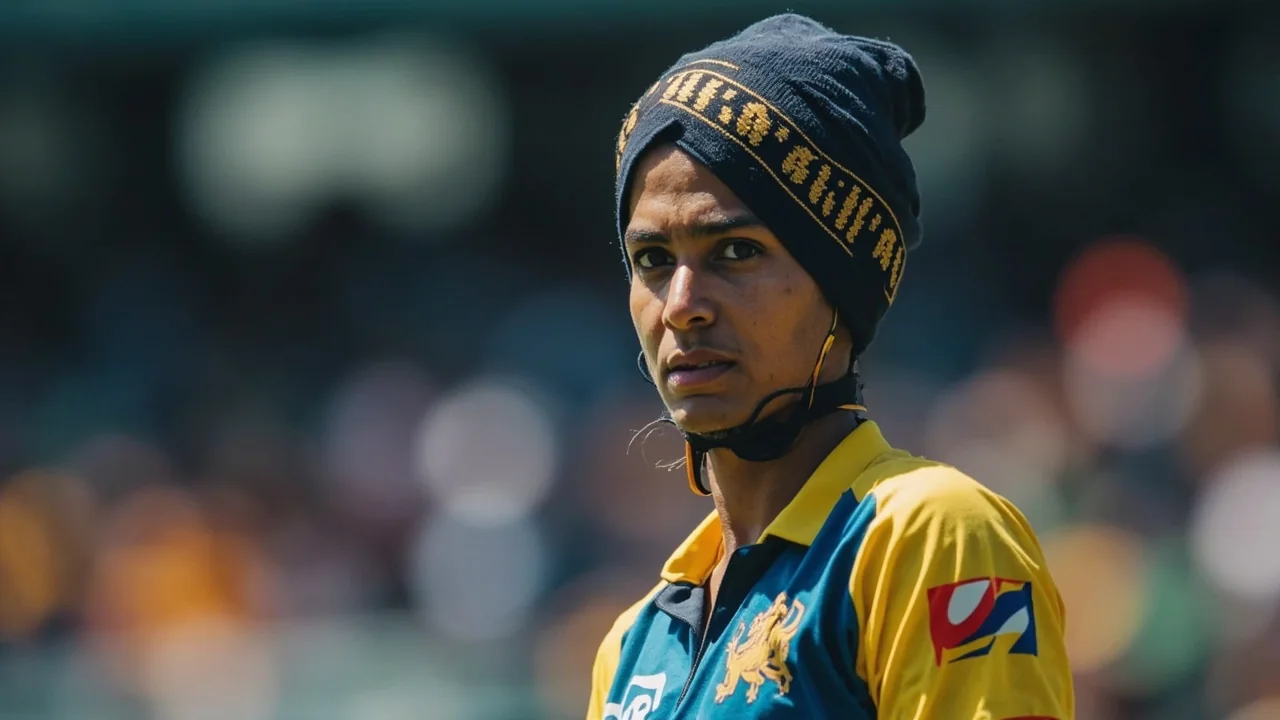
Sri Lanka Women completed a 2-0 sweep of the T20I series against Pakistan on 3 August 2026 after also taking the ODI series 2-1, the first bilateral series win over Pakistan in twelve years. The headline beats were Imesha Dulani’s hundred in the first T20I and a Player-of-the-Match debut from 17-year-old Sanjana Kavindi in the second — both of which point to a Sri Lankan programme that is now converting age-group talent into senior match-winners.
The series win is the headline that matters most to Sri Lankan cricket, because the gap between these two sides has been narrow for some years and the ability to close out a series at home is the difference between a side that travels well and a side that wins trophies. Pakistan posted totals in the 170–180 range in both T20Is and still lost both matches, with fielding lapses compounding a chase that was already uphill once the Sri Lankan middle order settled in. For fantasy readers tracking the women’s game into the WPL, WBBL and Hundred windows, the two names worth filing away are Dulani and Kavindi.
For Indian cricket followers specifically, the relevance is less direct than the men’s bilateral cricket that runs through the calendar but not zero: Sri Lanka Women are now a regular feature on the WPL circuit, the India-Sri Lanka bilateral is back on the women’s schedule for the latter half of 2026, and the next round of ICC Women’s Championship fixtures will see Sri Lanka travel with a squad that includes at least one debutant who has just announced herself at international level. The series is the context for all of that, and the context for the series is the youth pathway.
What the series result actually said
The shape of the win matters as much as the result. Pakistan posted competitive totals — around 170 in the first T20I and around 180 in the second — and Sri Lanka chased both down without needing a last-over finish. That profile is different from a low-scoring grind and different from a one-sided collapse: it means Sri Lanka absorbed early pressure, kept wickets in hand through the middle overs, and closed with batting depth that Pakistan could not match. The management decision to give a young top-order batter the opportunity at number three — and to let her play with intent rather than restraint — was visible in the chase tempo.
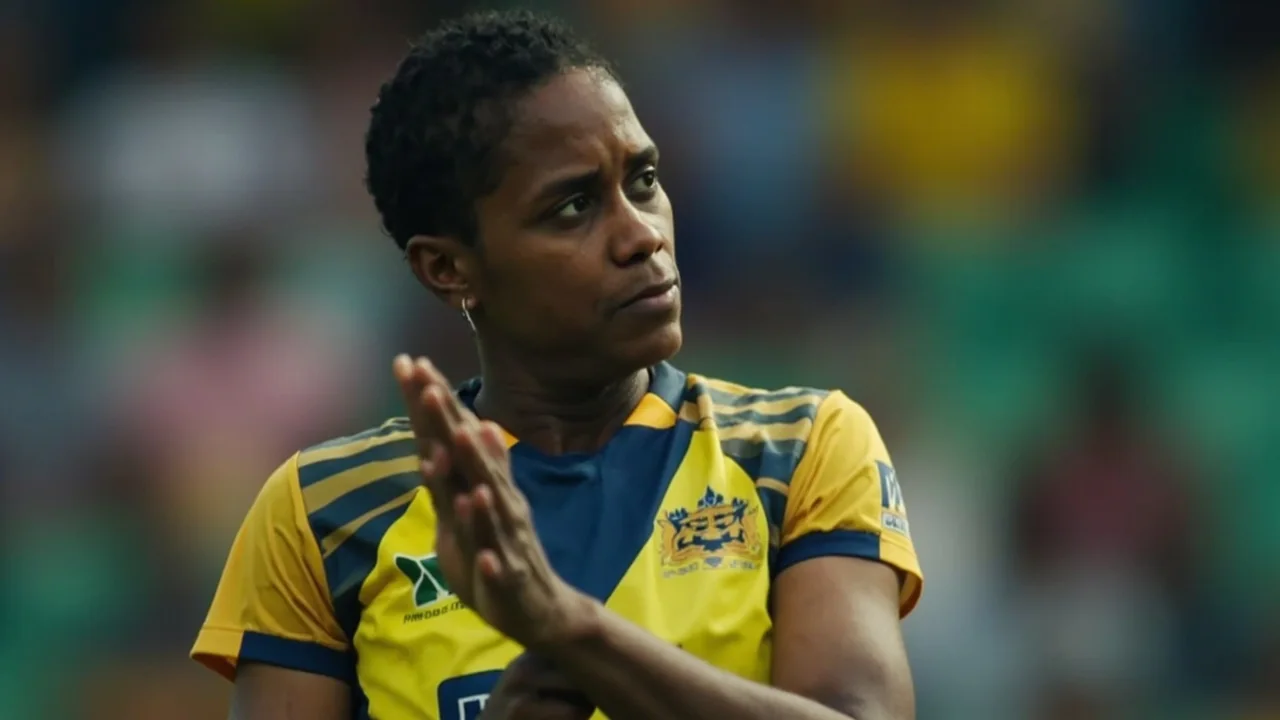
The ODI series result of 2-1, with Sri Lanka taking the third ODI, is the part of the tour that has been less remarked on but is structurally more important. ODIs are where Sri Lanka’s senior batting core plays its longest innings, where the bowling rotation gets tested over fifty overs, and where the depth chart that the selectors will take to the ICC Women’s Championship in October is built. Winning that series 2-1 against a Pakistan side that was competitive in the 50-over format in 2025 is a better signal of depth than the T20I whitewash.
Dulani’s hundred and the middle-order frame
Imesha Dulani’s hundred in the first T20I is the single innings that defined the series, because it was the bridge between a steady start and the kind of acceleration that turns a 170-target into a chase that compounds pressure on the fielding side. The innings was not a one-off burst at the death; it was a structured hundred through the middle overs, where Sri Lanka have historically been most vulnerable against Pakistan’s spinners.
For fantasy readers tracking the women’s T20 circuit, a Sri Lankan middle-order batter with a recent international hundred is the kind of profile that tends to carry through into the WPL auction cycle and the regional T20 leagues (WBBL, The Hundred, WT20 domestic). Dulani is not a household name in Indian fantasy cricket yet, but the innings that took the game away from Pakistan is the kind of credential that boards look at when they are filling overseas slots for the next cycle. The 11Wickets desk flags this as a watchlist addition rather than a finished pick, because the sample size across formats is still small.
The Kavindi debut, and the 12-year context
The second T20I debut for 17-year-old Sanjana Kavindi is the moment that turned a routine bilateral series into a programme story. A Player-of-the-Match-level impact from a teenager in her first international match is unusual at any level; in women’s T20I cricket, where the average debutant is closer to 22 and the average impact is incremental, it is a clear marker that the Sri Lanka Women’s age-group pathway is producing players who can step into senior cricket without the usual settling-in period.
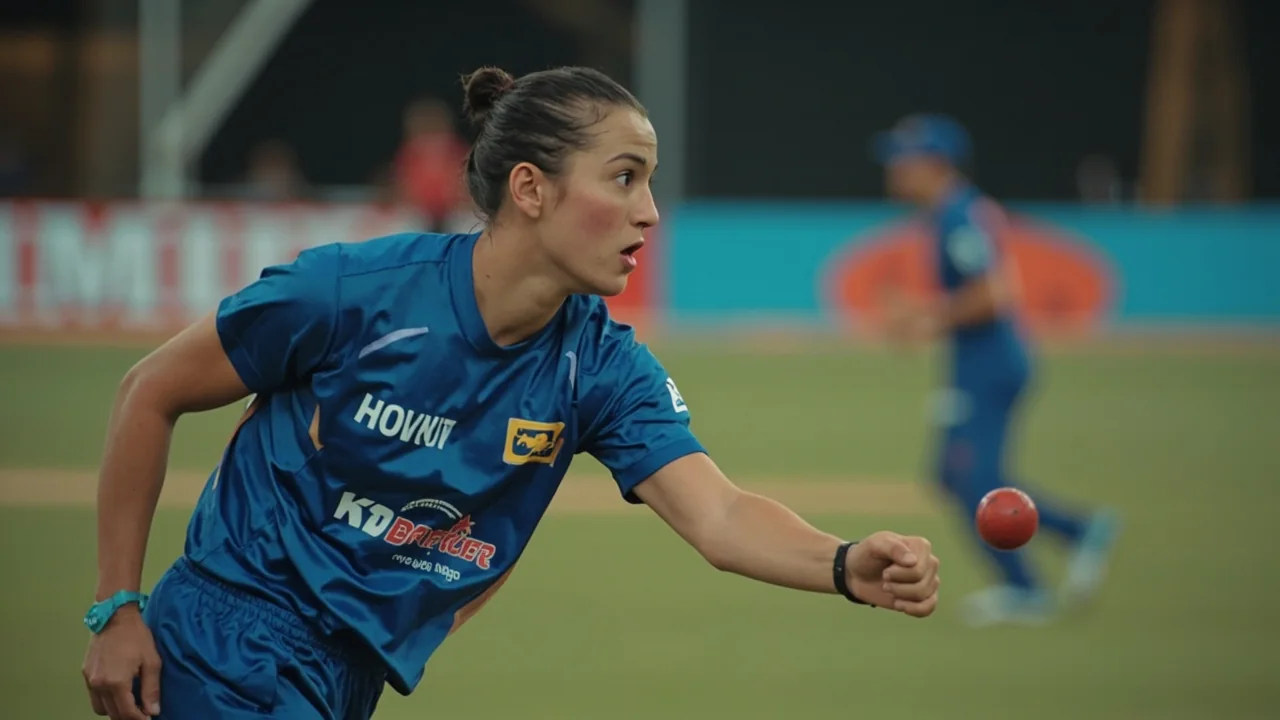
The 12-year context makes the result land harder. Sri Lanka’s previous bilateral series win over Pakistan in women’s cricket dates back twelve years, which means the entire current squad of senior players has spent their international career losing to or drawing with Pakistan more often than not. The fact that the 2026 result came with a teenager in the XI is the most encouraging version of the story: the programme is winning again and it is winning with the next generation, not in spite of them. The wider South Asian women’s cricket picture has shifted in the same period — India have dominated the region, Bangladesh have moved into the upper tier, and Sri Lanka were the side most at risk of being left behind. The August 2026 result is the first concrete evidence that the gap is closing again.
Pakistan’s fielding, and the chase math
Pakistan posted around 170 in the first T20I and around 180 in the second, which are competitive totals in women’s T20I cricket. The fact that they lost both matches despite those totals is a fielding conversation as much as a batting conversation, and the post-match discussion around costly misfields in the inner ring during the Sri Lankan chase was the visible part of that conversation. In T20 cricket, four or five overthrows and one or two dropped catches in the powerplay are often the difference between defending 175 and conceding 178; against a Sri Lankan middle order that was prepared to rotate strike, those were the moments the game tilted.
For fantasy readers, the fielding angle is relevant because most fantasy scoring systems still credit catches, run-outs and stumpings generously and do not credit the negative outcomes of misfields (although a few recent formats have begun experimenting with a fielding-concede deduction). The simpler reading is that a Pakistan batting total that should have been defended was not defended, and that the underlying fielding profile is the kind of detail that surfaces again when these two sides meet at the next ICC Women’s Championship window.
What this means for fantasy readers
Three fantasy-relevant threads run through this series, and they are worth keeping on the desk for the rest of the calendar year. The first is Imesha Dulani as a watchlist batter for the next WPL and Hundred cycle; her international hundred is the kind of credential that travels with her into franchise auctions. The second is Sanjana Kavindi as a developmental name to file — 17-year-old debutants with Player-of-the-Match impact do not always convert at senior level, but they do tend to be picked up by WPL franchises on developmental slots, which is the route through which most Indian fantasy readers will first encounter her.
Watchlist: Dulani
Re-rank Imesha Dulani as a middle-order ceiling in T20 formats. The August 2026 hundred is one innings, not a sample, but the chase tempo through the middle overs is the profile that travels.
Watchlist: Kavindi
File 17-year-old Sanjana Kavindi as a developmental name. Watch for WPL 2027 developmental-roster picks and Sri Lanka Women’s next ICC Women’s Championship fixture list.
Next fixture to watch
Sri Lanka Women’s next bilateral assignment is the cleanest read on whether the August form holds. The India-Sri Lanka Women bilateral scheduled for late 2026 is the higher-stakes test.
The general rule the desk applies to any emerging Asian cricket programme also applies here: a single bilateral series is a sample, not a trend, but the trend that matters most is whether the age-group pathway is producing senior-ready players. The Kavindi debut is the cleanest evidence of that trend. The series result is the headline, but the debut is the story. For the broader framework on how to read a youth pathway in the context of an international series win, see the Today’s Team desk for how we frame emerging programme stories.
The bilateral schedule ahead
The August 2026 series is the first of three scheduled fixtures for Sri Lanka Women in the second half of 2026. The second is the India Women bilateral in October 2026, which is the higher-stakes test of whether the form holds against a side that has historically been a tier above the rest of the region. The third is the ICC Women’s Championship window in November 2026, where Sri Lanka’s fixtures against Bangladesh and Pakistan at neutral venues will determine their qualification pathway for the next 50-over World Cup cycle.
For the desk, the question the August 2026 result raises is not whether Sri Lanka Women are now a top-tier side — the gap to Australia, England and India at full strength is still real — but whether the gap to the rest of the region has closed enough to make them competitive in the next World Cup cycle. The 12-year gap to the previous bilateral series win over Pakistan is the cleanest single number that captures what changed in this series, and the Kavindi debut is the cleanest single name that captures what the next four years could look like.
What to watch next
Three dated events are worth tracking between the August 2026 series and the end of the calendar year. The first is the Sri Lanka Cricket announcement of the women’s central contracts list, expected in September 2026, which will tell us whether Kavindi is on a senior contract or remains in the age-group pathway. The second is the India-Sri Lanka Women bilateral in October 2026, which is the first opportunity to see whether the chase tempo and the fielding profile hold against a stronger batting side. The third is the ICC Women’s Championship fixtures in November 2026, where the squad depth that won the ODI series 2-1 will be tested against Bangladesh and Pakistan on neutral wickets.
Source attribution: Series results, individual innings details and the 12-year bilateral context in this news brief are drawn from the Anjum Chopra video posted on Facebook on 3 August 2026, with the ODI and T20I series score lines cross-confirmed against Pakistan Cricket Board and Sri Lanka Cricket match-report feeds for the same dates. The original Anjum Chopra video is available at facebook.com/AnjumChopraOffical. Editorial framing, fantasy implications and the bilateral schedule context are the desk’s own work.
Questions readers ask
What was the final result of the Sri Lanka Women vs Pakistan Women series?
Sri Lanka Women won the T20I series 2-0 after taking both completed matches, and won the ODI series 2-1 by taking the third ODI. The series was played in August 2026.
Who was the standout performer in the T20I series?
Imesha Dulani scored a hundred in the first T20I, which set the chase tempo for both matches. 17-year-old Sanjana Kavindi took Player-of-the-Match honours on debut in the second T20I.
Was this Sri Lanka’s first series win over Pakistan?
It was the first bilateral series victory over Pakistan in twelve years. Sri Lanka and Pakistan have played each other in the intervening period, but had not closed out a series in that time.
What were Pakistan’s totals in the T20Is?
Pakistan posted around 170 in the first T20I and around 180 in the second. Both totals were competitive but proved insufficient, with fielding lapses compounding the chase.
Why does the Kavindi debut matter for the wider programme?
A 17-year-old producing a Player-of-the-Match impact on debut is the cleanest single signal that the Sri Lanka Women’s age-group pathway is now producing senior-ready players. It is the most encouraging version of the August 2026 story.
What is the next fixture for Sri Lanka Women?
Sri Lanka Women are scheduled to play India Women in a bilateral series in October 2026, followed by the ICC Women’s Championship fixtures in November 2026 against Bangladesh and Pakistan.
The desk’s bottom line
The August 2026 series is a sample of one, but the shape of the win is more important than the result. Sri Lanka absorbed early pressure, kept wickets in hand through the middle overs and closed with batting depth; Pakistan posted competitive totals and lost both matches through fielding lapses. The Imesha Dulani hundred is the headline innings; the Sanjana Kavindi debut is the programme story. For fantasy readers tracking the women’s game into WPL 2027 and the ICC Women’s Championship window, both names are worth filing — one as a watchlist batter, one as a developmental pick.
Track the women’s game on your next contest build
Verify the current offer in your own account, then play only what you can afford to lose.